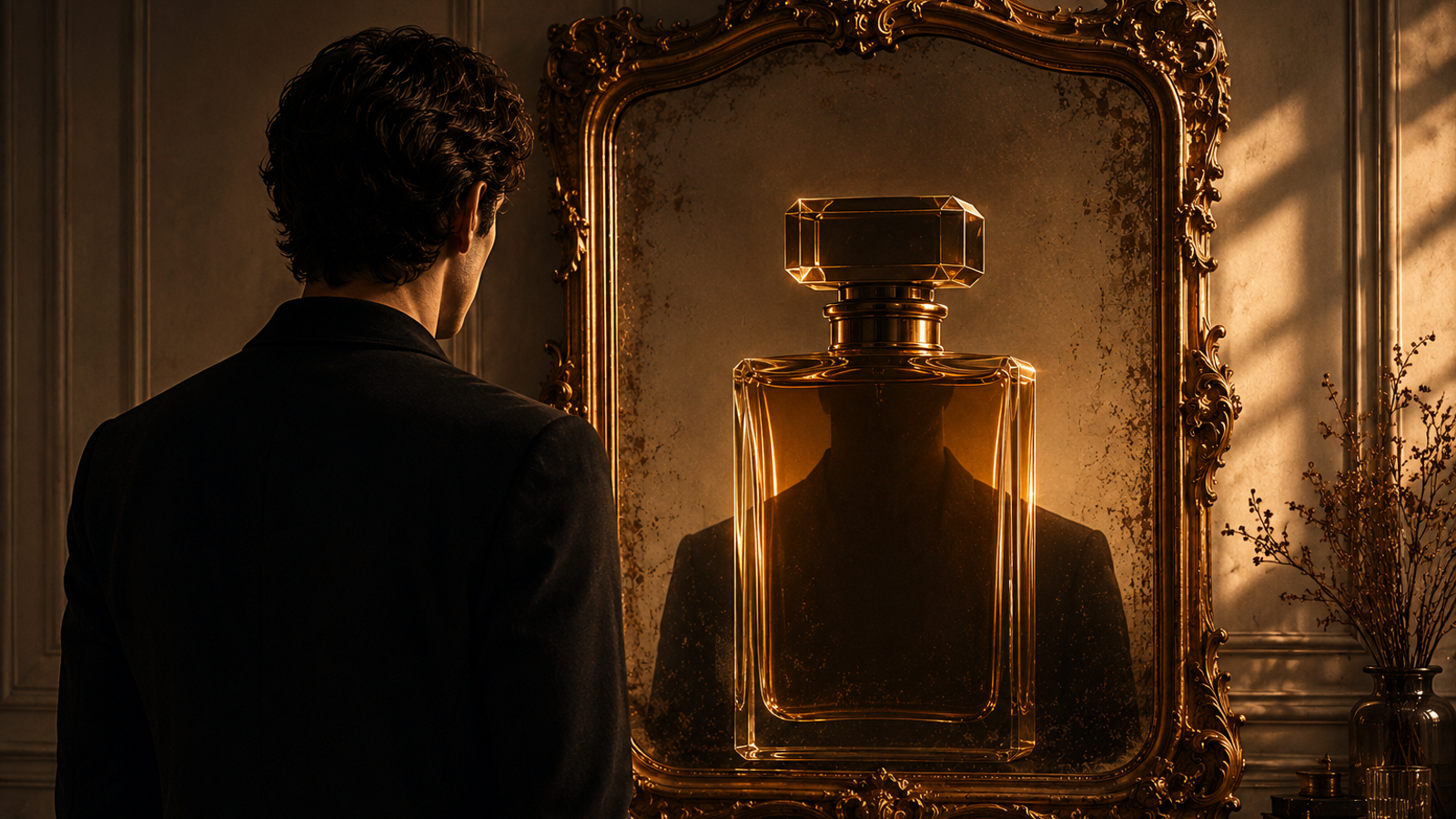
When the Brand Becomes the Person
The celebrities who turned themselves into intellectual property — and what happens when the empire grows bigger than the human at its center.
There is a moment in the career of a certain kind of modern celebrity when a quiet, irreversible shift takes place. It isn't marked by a press release or a ribbon-cutting. It happens somewhere between the second business acquisition and the third Forbes cover — the moment when the public stops thinking of them primarily as a performer and starts thinking of them as a brand. At that point, the person and the IP have become indistinguishable. And that fusion, it turns out, is worth billions.
Taylor Swift, Rihanna, and Ryan Reynolds did not arrive at this moment the same way, and their empires look nothing alike. But they share something essential: each of them understood, earlier and more clearly than most, that fame is a raw material — finite if squandered, inexhaustible if converted into ownership. The question that defines this era of celebrity capitalism is not simply how much money these figures have made. It is what happens to identity, artistry, and autonomy when you become your own most valuable product.
The Ownership Imperative
To understand what Taylor Swift has built, you have to start not with the Eras Tour or the re-recordings or the fan mobilization machine known as the Swifties, but with a contract signed by a fifteen-year-old girl in Nashville in 2005. That contract, with Big Machine Records, handed over the master recordings of her first six albums to a label that would, fourteen years later, sell them without her consent. When Scooter Braun acquired Big Machine Records in 2019 and gained control of those masters, Swift was direct and public about what had happened: she had been stripped of her own work.
Her response is now one of the most audacious acts of commercial counter-programming in music history. Beginning in 2021 with Fearless (Taylor's Version), she launched a systematic re-recording of her early catalog — not primarily to release new music, but to devalue the assets she no longer controlled. The strategy worked in ways that went far beyond embarrassing her adversaries. It reshaped industry contract norms, inspired a generation of emerging artists to demand master ownership clauses, and turned an act of corporate aggression into a years-long cultural event. By May 2025, Swift had purchased back the original masters entirely from Shamrock Capital, reclaiming full ownership of everything from the album tracks to music videos and unreleased material.
The financial architecture she has constructed around this IP is staggering. The Eras Tour, spanning 149 shows across five continents from March 2023 to December 2024, became the highest-grossing concert tour in history, generating $2.077 billion in ticket revenue alone — more than twice the previous record held by Elton John's Farewell Yellow Brick Road Tour. The accompanying concert film collected $261 million at the global box office, itself a record for the format. Merchandise revenue from the tour added an estimated $440 million. In total, Swift became the first musician to achieve billionaire status entirely through songwriting and performing.
But the number that matters most is not the tour revenue. It is the ownership percentage. Every one of those dollars flowed from intellectual property that Swift either controls or is actively reclaiming. That distinction — between being the product and owning the product — is the central lesson of her career, and it is one the industry is still absorbing.
The Fenty Formula
Rihanna took a structurally different path to the same destination, and her story may be the more instructive one for understanding what celebrity-as-IP actually means in commercial practice.
When Fenty Beauty launched in September 2017 in partnership with LVMH's Kendo Brands incubator, it did not arrive as a celebrity vanity project. It arrived as a cultural argument. The launch lineup included 40 foundation shades — a number that seems unremarkable now only because Fenty normalized it. At the time, it was a direct indictment of an industry that had spent decades treating darker skin tones as an afterthought. The phrase "the Fenty effect" entered the beauty industry lexicon within weeks of the launch, describing the wave of competitor brands rushing to expand their own shade ranges in response.
What distinguished Rihanna from nearly every celebrity who had put their name on a beauty product before was not the marketing or the shade range. It was the deal structure. Rather than accepting a royalty arrangement — the standard celebrity endorsement model — she negotiated a 50 percent equity stake in the joint venture. That decision is the reason she became a billionaire. Fenty Beauty reached a valuation of approximately $2.8 billion, meaning her half was worth roughly $1.4 billion. A 5 percent royalty on the same revenue would have yielded significant money; ownership yielded a categorically different kind of wealth.
The Fenty empire expanded from there: Savage X Fenty, a lingerie brand launched in 2018; Fenty Skin in 2020; and Fenty Hair in 2024, moving into a global hair-care market forecast to reach around $107 billion. Each extension carried the same core identity — inclusivity not as a marketing slogan but as a structural design principle. The brand did not merely represent Rihanna; it enacted her values in the form of product decisions, shade ranges, and model casting.
This creates a peculiar dynamic. The Fenty brand is inseparable from Rihanna's public persona, but it has also grown large enough to have institutional momentum of its own. In late 2025, reports emerged that LVMH was exploring a sale of its 50 percent stake in Fenty Beauty, with potential buyers reportedly valuing the brand at up to $2 billion. Whether or not that transaction materializes, the fact that the brand is now being discussed as an acquisition target independent of its founder is significant. At some point, the IP takes on a life that the person no longer fully controls — even when the person owns half of it.
The Maximum Effort Method
Ryan Reynolds represents a third model entirely — one built not on music or beauty, but on the celebrity itself as a creative and marketing instrument.
Reynolds did not build brands by attaching his name to existing products. He built them by becoming their creative director, their spokesperson, their primary writer, and their defining personality. When he invested in Aviation American Gin in 2018, a craft Oregon distillery, he did not simply endorse it. He doubled sales through a series of witty, self-aware ad campaigns — many produced through his own production and marketing company, Maximum Effort — and then sold the company to spirits giant Diageo in 2020 for $610 million. Reynolds walked away with approximately $122 million from that transaction.
He ran essentially the same playbook with Mint Mobile, a budget wireless carrier whose market positioning was essentially "phone plans, but funny." Reynolds acquired a stake and became the face and creative engine of the brand, appearing in deliberately low-fi ads that mocked telecom industry conventions. The ads worked not despite the absurdism but because of it — they communicated something that no traditional telecom campaign could: that this company understood the consumer's actual feelings about the industry. T-Mobile acquired Mint Mobile in 2024 for $1.35 billion. Reynolds's stake yielded him approximately $330 million.
The Maximum Effort approach — named for his production company — is a coherent theory of celebrity value. The argument it makes is that the celebrity's real asset is not their image but their voice: a distinct comedic and tonal identity that can be deployed into almost any product category and make that product feel like an extension of a human personality rather than a corporate construct. Where traditional celebrity endorsement treats fame as an advertising vehicle, Reynolds treats it as a creative medium. The brand does not borrow his credibility; it absorbs his sensibility.
This works, right up until it doesn't. The inherent risk of the Maximum Effort model is total dependency on a single personality. Aviation Gin and Mint Mobile did not have independent identities that could survive Reynolds's departure; they had his personality projected onto them. Diageo and T-Mobile were not buying the brands in isolation — they were buying the relationship between Reynolds and those brands. When that relationship is acquired by a corporation, the question of what it looks like ten years from now becomes genuinely unclear.
What Happens When the Empire Outgrows the Person
Each of these three figures has built something large enough to create a specific kind of problem: the brand may eventually need to exist without them, and it is not obvious that it can.
Swift's case is the most complex. The Eras Tour was explicitly a retrospective — a celebration of "eras" now behind her. It was also, implicitly, an acknowledgment that the era defined by her adversarial relationship with her own catalog is ending. Now that she owns her masters, and the re-recording project is effectively complete, the narrative that has animated much of her last six years — artist versus corporation, authenticity versus commerce — requires a new chapter. What Swift's brand looks like in its next phase is the most interesting open question in popular music.
Rihanna's brand confronts a different tension. Fenty Beauty was built on her active presence in the culture — her credibility as an artist and tastemaker was the guarantor of the brand's authenticity. In recent years, as music releases have slowed and her public presence has become more domestic and selective, questions have arisen about whether the Fenty brand can maintain its cultural authority without the constant renewal that her artistic output once provided. The lingerie business, Savage X Fenty, lost its CEO to Victoria's Secret in 2024 and saw sales plateau. Forbes noted a $400 million decline in Rihanna's estimated net worth during that period. The brand is not invincible; it is subject to the same gravitational forces as any business, regardless of who founded it.
Reynolds's brands have largely exited the question — both Aviation Gin and Mint Mobile now belong to corporations large enough to absorb the risk of personality drift. What he has demonstrated instead is a proof of concept: the celebrity-as-operator model, in which the star takes equity rather than a fee and deploys genuine creative energy into building something real, can generate returns that dwarf traditional entertainment income. His movie career, for all its commercial success, produced a fraction of the wealth his business exits did.
The Philosophical Weight of It
There is a broader question underneath all of this that tends to go unasked in the financial coverage: what does it mean, existentially, to be your own IP?
The artists and entertainers who have succeeded most dramatically in the celebrity-brand model are those who turned something genuine about themselves — Swift's obsessive control over her own narrative, Rihanna's commitment to inclusivity as a design philosophy, Reynolds's voice and humor — into a scalable commercial asset. The authenticity is real. But the act of turning authenticity into a product creates a feedback loop that is difficult to escape. The brand must remain consistent with the person, and the person must remain consistent with the brand, and over time it becomes harder to tell which one is leading.
Swift's re-recording campaign was both a legal strategy and a statement of values. But it also turned her personal grievance into a multi-year commercial event and a loyalty test for her fanbase. The line between genuine artistic principle and extraordinarily effective brand narrative is thin enough that observers disagree about which side of it she is on — and the honest answer is probably that she is on both sides simultaneously. That is what it means to be your own IP.
Rihanna built a beauty company whose founding argument was that the industry had been failing Black women for decades. That argument was true before it was profitable. But the profitability of the argument does not make it less true; it may, in fact, have amplified it. A brand worth $2.8 billion has more power to enforce inclusive standards on the industry than a brand worth $280 million. The ethics and the economics are not in conflict here. They are, unusually, the same thing.
Reynolds's model is the most openly transactional of the three, and perhaps the most honest about what it is. He is not claiming that Aviation Gin represents his deepest values or that Mint Mobile changed how he thinks about communication. He is claiming that humor, when applied consistently and with genuine skill, can make almost any product feel like something worth paying attention to. That claim has been validated by two nine-figure exits. It is a narrower philosophy than Swift's or Rihanna's, but it is also a cleaner one.
What all three share is a fundamental reorientation of the celebrity's relationship to the economy. The traditional model — artist creates work, corporation captures the value, artist receives a percentage — has been displaced by something more ambitious and more precarious: artist becomes the corporation, captures the value themselves, and lives with the consequences of that decision in every public appearance, every creative choice, and every business exit.
The brand and the person are the same thing now. The only question is which one is in charge.
The Clarke Standard